
Decode Chippewa County Property Tax Records
Start by figuring out which number actually answers your question. Michigan uses precise assessment vocabulary. The billed tax, for instance, is never a sale value. County Equalization reviews the city and township rolls to keep them uniform, but the office does not set any single parcel's assessment.
| Record field | What it reports | Responsible source |
|---|---|---|
| True cash value | The assessment concept tied to usual selling price | Local assessor and equalization framework |
| Assessed value | The assessment figure before equalization and statutory limits | Local assessment roll |
| State equalized value | Generally 50% of true cash value after equalization | Assessment record |
| Taxable value | The value to which millage is applied | Assessment and tax record |
| Tax status | Year-specific charge, payment, or delinquency information | Treasurer and linked tax portal |
Write down the tax year, assessment year, municipality, parcel ID, exemption status, and the exact panel name you are reading. Keeping those fields straight prevents a current charge from getting mixed up with an older roll or a map-report summary.
Look Up Chippewa County Property Tax
Both Equalization and the Treasurer link to the BS&A parcel search. The county describes the search fields as owner or taxpayer name, mailing and situs address, property description, taxable status, parcel identifier, and tax information. The county does not state the live labels, coverage years, or export options.
- Find the parcel by address, owner name, or property ID and confirm its municipality.
- Select the intended tax year and record the assessed, SEV, and taxable labels exactly.
- Check the exemption or classification shown for that year.
- Follow the Treasurer route for delinquent status, amount due, or payment instructions.
- Call the responsible office when a certified balance, payoff, or appeal record is needed.
The official blank-search capture shows the county portal entry.
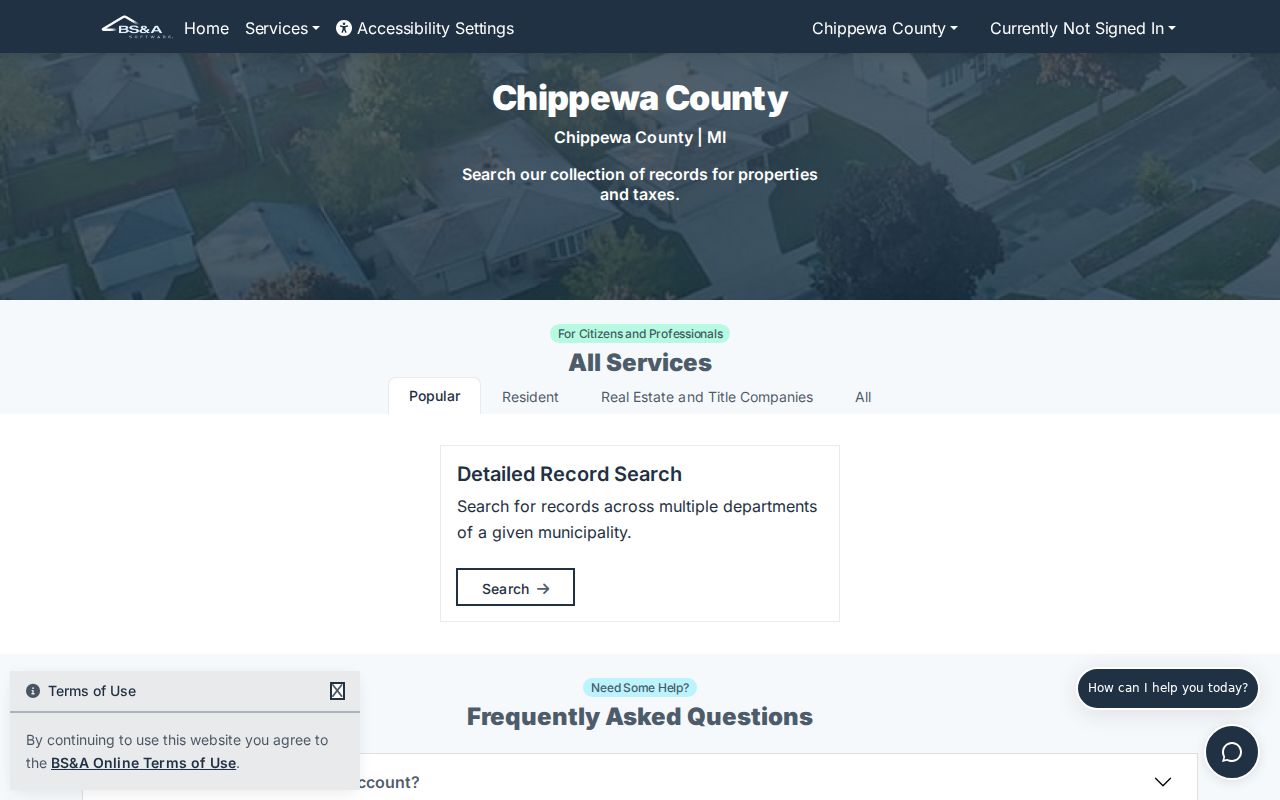
A blank portal view only confirms access. It says nothing about a parcel's current value or balance. Note the tax year and result state each time you use it.
Chippewa County Tax Terms
Many Chippewa County tax terms look alike yet describe separate stages of the same process. Telling them apart is what makes property tax records readable across years.
- Assessed value
- The local assessment figure before equalization and taxable-value limits.
- SEV
- The state equalized value, generally 50% of true cash value under county guidance.
- Taxable value
- The value multiplied by millage to calculate tax.
- Mill
- One unit in the local formula: taxable value multiplied by mills, divided by 1,000.
- Tax lien
- The legal claim associated with unpaid property tax, which is not itself proof that a sale occurred.
A sale or consideration amount sits in its own field. County guidance is clear that the actual sale price cannot be the sole basis for setting a new SEV.
Track Chippewa County Transfer Changes
A property transfer puts several clocks in motion at once. Per the county FAQ, the taxable value may uncap in the year after the transfer. It may then rise to the current SEV. The SEV generally runs about half the typical selling price. The transfer price by itself, though, cannot set the new SEV.
New owners generally must file Michigan Property Transfer Affidavit Form 2766 with the local assessor. The deadline is 45 days after a non-exempt transfer. That duty holds even when no deed is recorded. The form is public, not confidential. It asks for the address, municipality, transfer date and price, PIN, parties, financing and relationship details, exemption claims, and a certification.
For the paperwork itself, the county Equalization forms index lists what the office publishes.
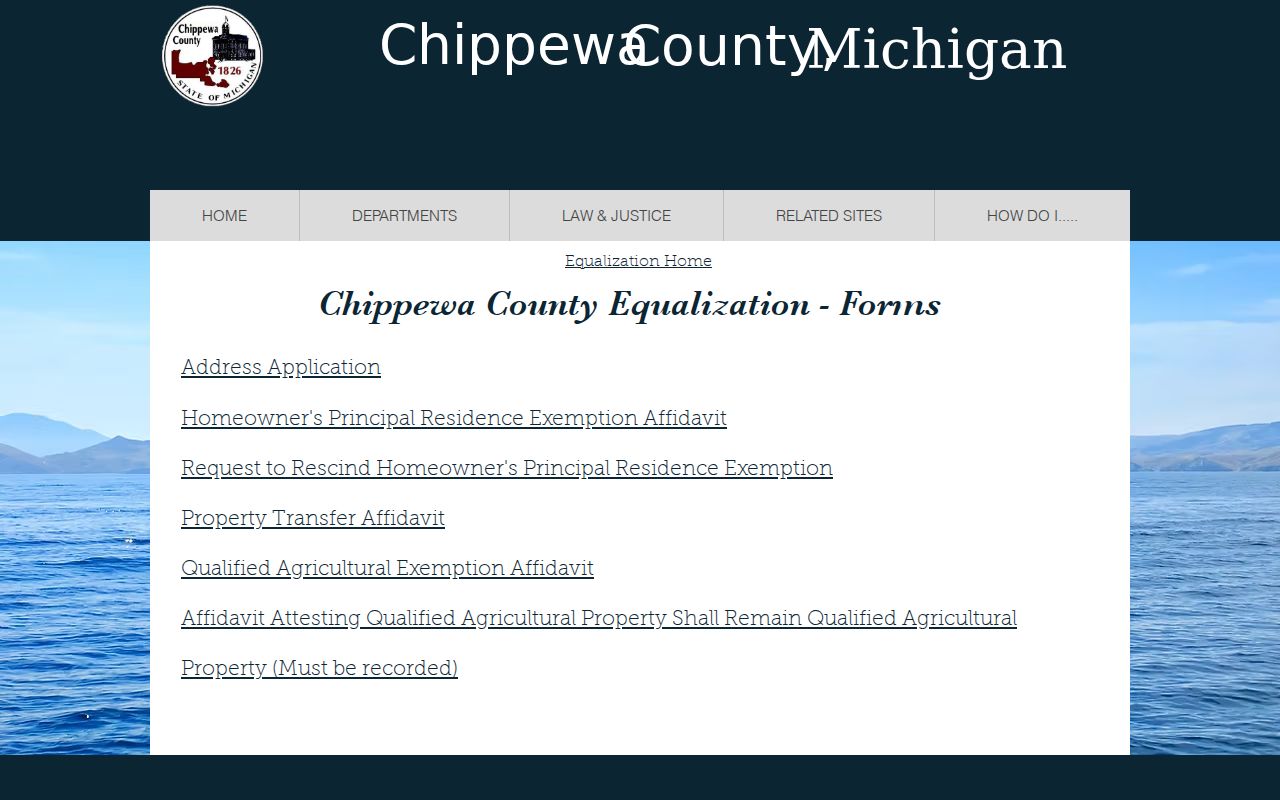
The form list points you to the right filing. How a supported change gets processed is decided by the parcel's local assessor.
Read Chippewa County PRE Records
The Principal Residence Exemption changes a parcel's tax treatment and carries its own forms. County guidance says an owner should rescind the PRE once the property stops being the principal residence. A PRE line proves neither fee title nor that anyone was physically present on a given date.
Review the grant, denial, and rescission records for the right tax year. Then compare them against the taxable value and millage on that same year's record. Family transfers, trusts, court orders, agricultural, forest, conservation, foreclosure, and tax-sale situations may involve distinct transfer exemptions. So confirm the applicable facts and statute with the local assessor.
Note: Keep the PRE record separate from the deed, GIS address, and owner mailing line. Each source answers a different question.
Check Delinquent Chippewa County Taxes
Delinquent real-property taxes in Chippewa County move to the Chippewa County Treasurer on March 1. The Treasurer collects them on behalf of the county's delinquent tax revolving fund. Looking up delinquent property records online is free. That holds at least for now, according to the county. For an answer tied to a specific parcel, call the office instead of emailing. The published Treasurer phone number is 906-635-6308.
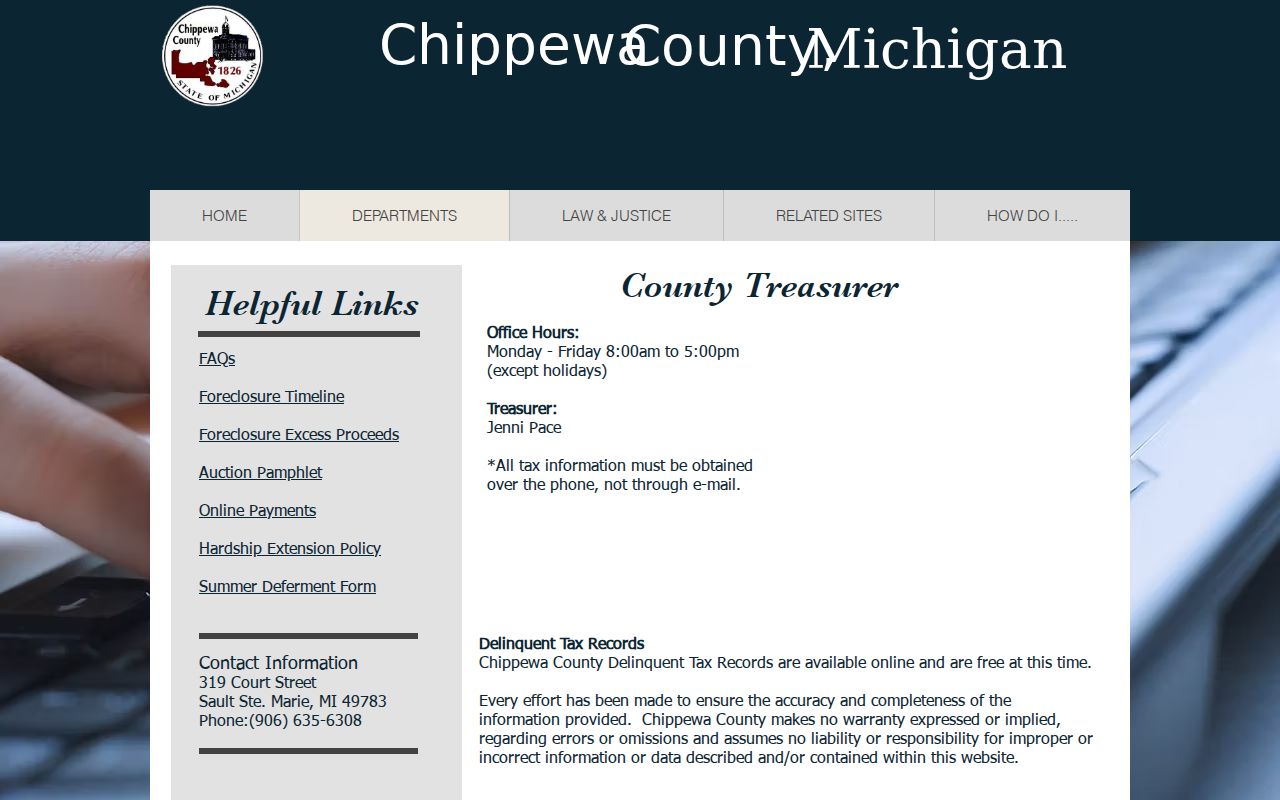
A delinquent flag is just one stage. It does not prove title has vested in the county or a buyer. Track the tax year, notice status, redemption status, and any later court or sale event separately.
Pay Chippewa County Property Tax Carefully
The online payment instructions call for the correct property ID and the exact amount due. Pay with the wrong property number and the county will not refund it. Convenience fees apply: 3% for credit cards with a $3.99 minimum, and $3.95 for debit. The payment page's own warnings explain this. They urge you to verify the PIN and the current amount before you submit anything.
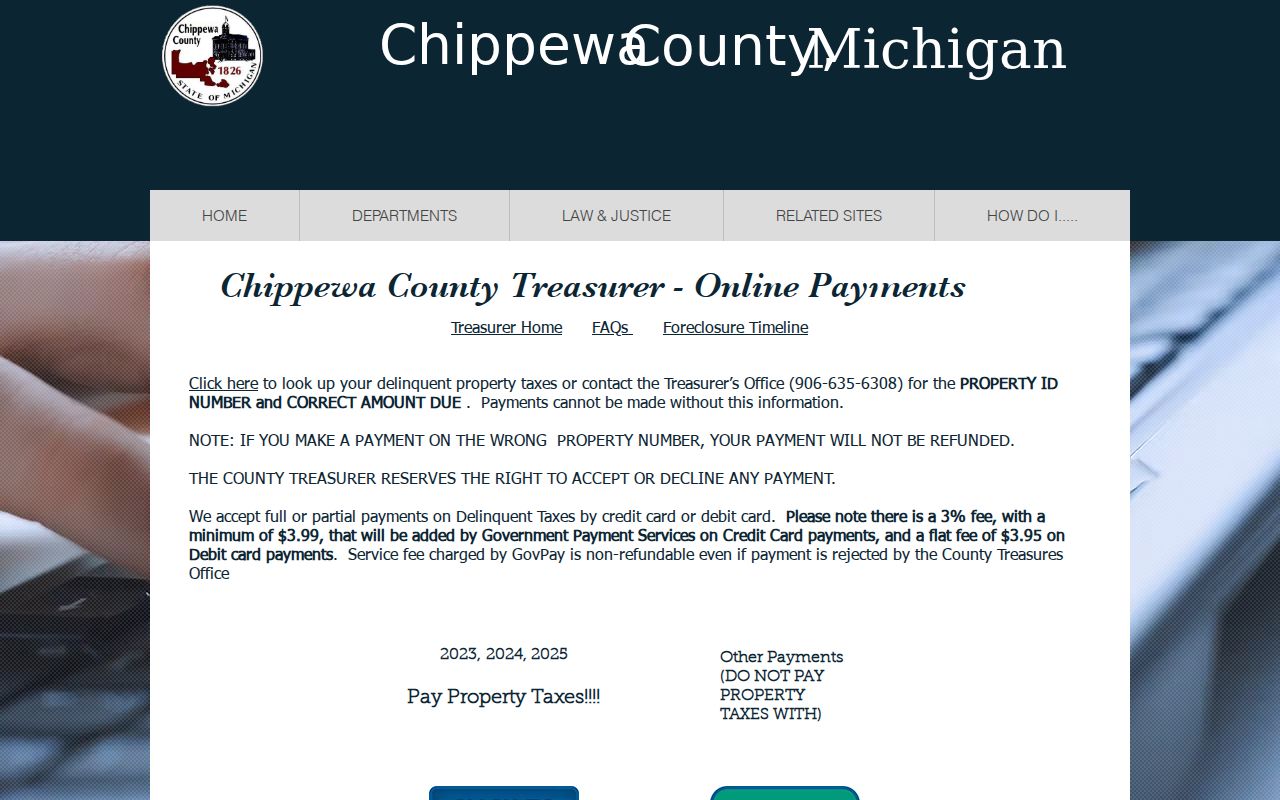
The Treasurer page lists annual references through 2025. Confirm the active year and current fee at checkout rather than carrying an old year forward.
Follow Chippewa County Foreclosure Stages
Once a parcel is more than 24 months delinquent, the county says it can be sold after title work and a court order. That is a process description, not a claim that every unpaid line has reached foreclosure or sale. The Treasurer foreclosure page links the official two-page timeline, which traces the county's route from delinquency to sale.
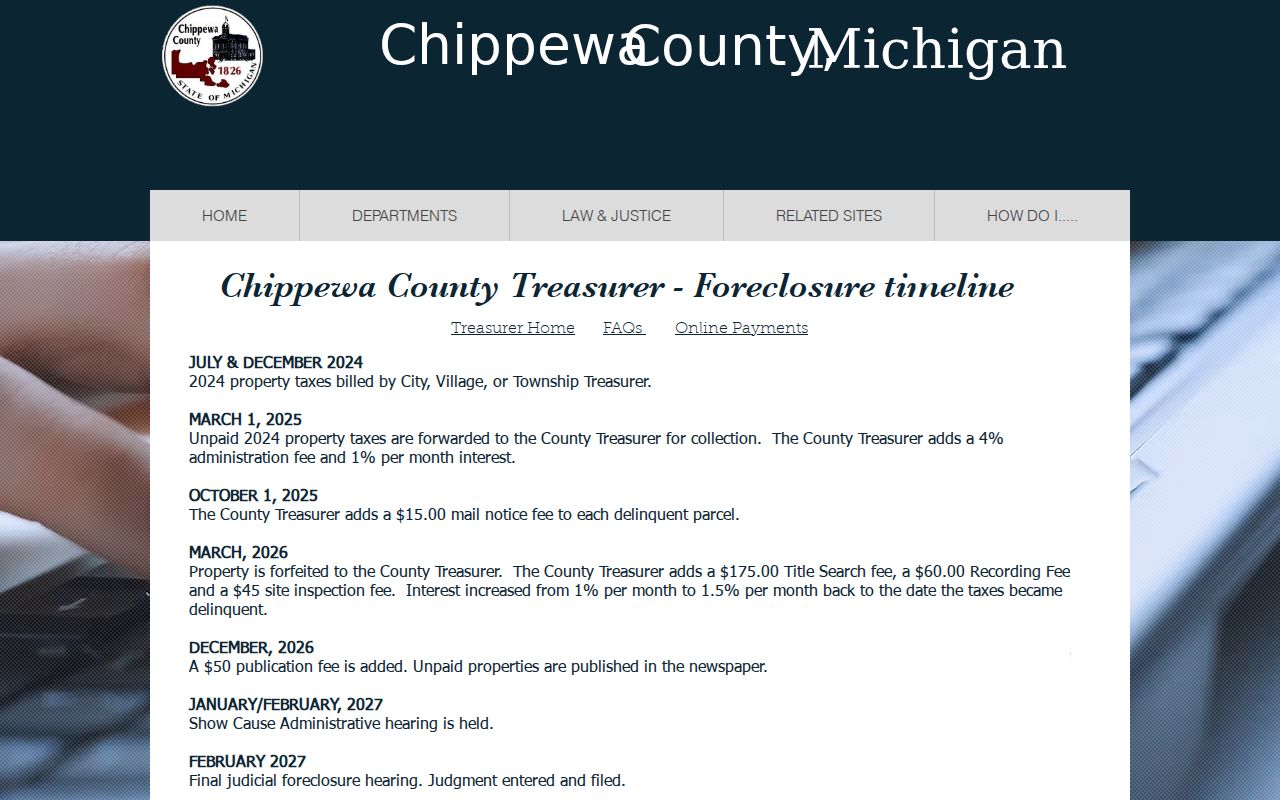
Keep delinquency, notice, forfeiture or redemption, title work, court order, sale, and any later tax or sheriff deed in separate mental buckets. A portal balance alone establishes none of that sequence.
Appeal a Chippewa County Assessment
Start with the local assessor. A dispute over one parcel's value goes to the city or township assessor first. It does not go to County Equalization. County guidance lays out a March Board of Review route. A timely appeal by letter or in person protects your Michigan Tax Tribunal rights. No single universal deadline applies, so check the notice and Board schedule for that municipality. Gather the assessment notice, the parcel card, photographs or condition facts, comparable sales, land measurements, and a plain statement of the disputed field. Equalization can supply a lot size or plot map. The county notes, though, that it cannot survey land or locate stakes. For more detail, the county Equalization FAQ covers common questions.
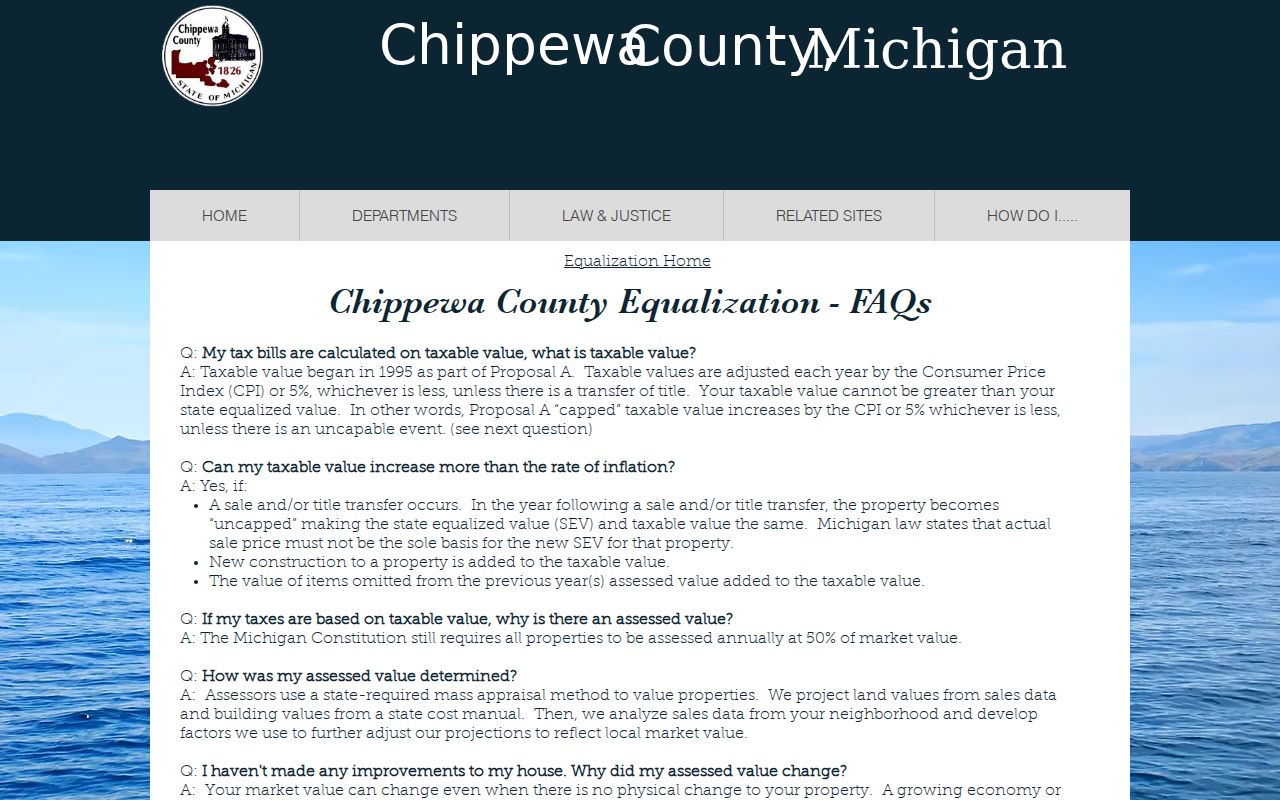
The county sets the framework. The parcel's own municipality supplies the Board schedule and the individual assessment decision.
Do not miss the local window. Check the parcel's March Board of Review notice promptly and file by the municipality's stated deadline to preserve further appeal rights.
Audit Chippewa County Tax History
When two years of tax history differ, resist the easy conclusion. Build a short timeline instead of assuming the property's value moved by that amount. Log the transfer date, the prior taxable value, and next-year uncapping. Add any new construction. Include a PRE grant or rescission, Board of Review action, and millage change. Note any special assessment and delinquency or payment events too. An increase can come from uncapping, construction, an exemption change, or millage. A decrease may follow a correction, a classification change, or a new exemption. Note the year and season for each figure. Keep FetchGIS or BS&A panel labels attached to every number so the source stays clear.
For what the figures mean beyond the bill, the Chippewa County property-value guide goes deeper. The tax page stays focused on assessment, billing, payment, delinquency, and appeal. A formal transaction may need a certified tax statement rather than a public screenshot. The Register of Deeds directory notes a separate Treasurer tax-certification charge. It applies to a document with a warranty clause. Confirm the current procedure before relying on that reference. A portal amount helps with research. It should never stand in for a certified payoff, redemption quote, or final foreclosure status.
Keep one row per year and per source in the audit. Note the season where the portal uses one. Then attach the assessment action or payment event that explains the change. This simple record shows whether a shift came from the tax base. It may instead be the millage applied to that base. A special assessment could be the cause. So could an unpaid prior-year charge.