
Read Chippewa County Deed Types
Not every instrument at the Register of Deeds moves ownership. Chippewa County indexes warranty, quitclaim, administrator, tax, and sheriff deeds, alongside land contracts, probate orders, mortgages, assignments, discharges, liens, surveys, plats, leases, and land patents. Each type does different work, and the office directory keeps them sorted by name.
| Deed type | What the instrument does | Typical record clue |
|---|---|---|
| Warranty deed | Conveys the interest with warranties stated in the instrument | Ordinary sale or transfer |
| Quitclaim deed | Conveys whatever interest the grantor has without the same warranties | Family, entity, or title cleanup transfer |
| Administrator or estate deed | Conveys through a fiduciary acting for an estate | Probate branch in the chain |
| Tax or sheriff deed | Records a transfer tied to a statutory or court process | Tax or foreclosure follow-up |
| Land contract | Records contractual sale terms and may later be assigned or discharged | Ownership path that is not a simple deed sequence |
A mortgage, lien, assignment, or discharge can burden or release an interest without conveying anything. Read the label first. Then match the legal description before treating an indexed item as the ownership transfer.
Search Chippewa County Deeds Online
The county online-search instructions route researchers to LandWeb, where documents can be searched by number, name, description, and date. Guest access is offered. The static page does not state the control labels, the document-type menu, or the earliest online year, so those details should not be guessed.
| Documented search path | Useful input | What to preserve |
|---|---|---|
| Name search | Grantor or grantee plus variants | Role, exact spelling, date range |
| Document number | Known recording reference | Instrument type and recording date |
| Description search | Subdivision, lot, section, or other indexed text | Matching legal-description wording |
| Date search | Approximate recording window | From and through dates used |
The blank LandWeb search screen is captured below.
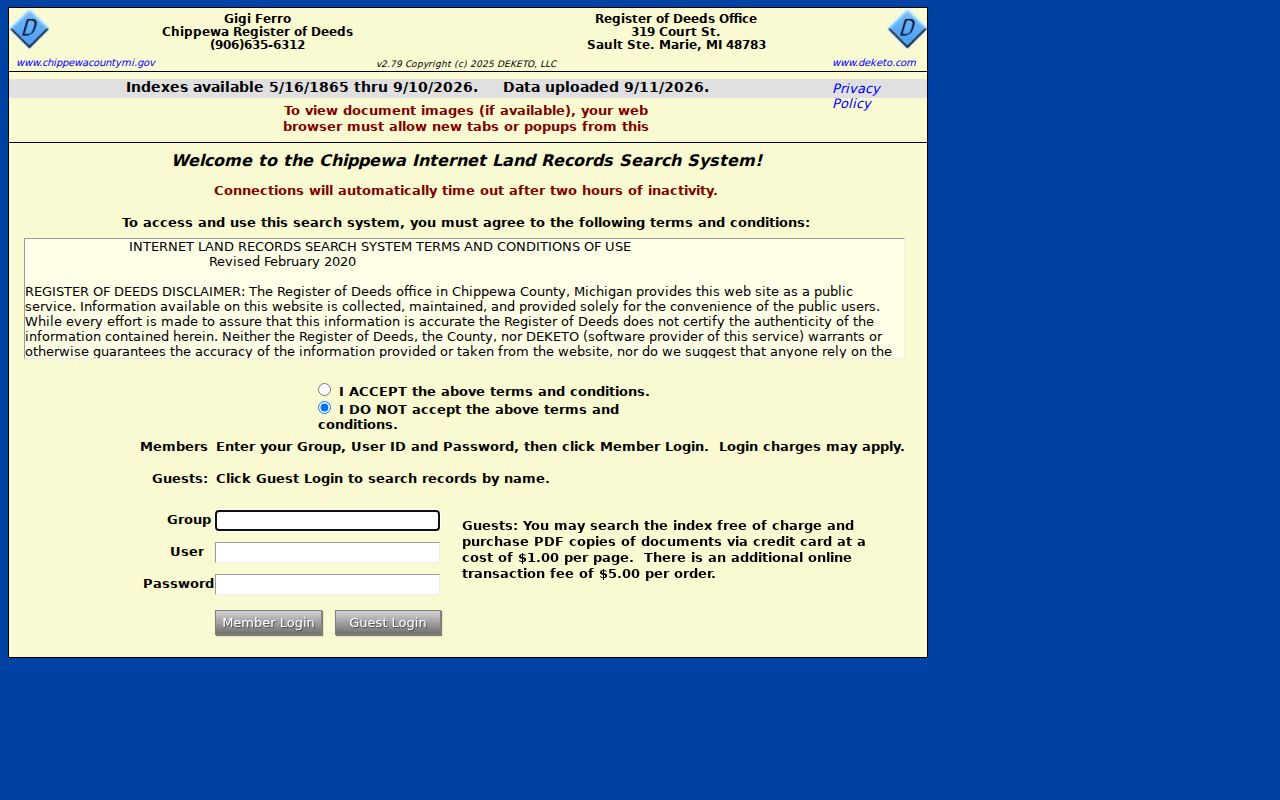
The portal route is official. A parcel-specific conclusion still needs the result and document image itself.
Build a Chippewa County Deed Chain
Start a chain with the most recent deed and follow the transferring party backward. Names alone are thin evidence. Two people can share a name. Estates, trusts, or business entities often hold title in Chippewa County. The legal description keeps every link tied to the same parcel of land.
- Find the current party as grantee within the likely recording period.
- Open the image and copy the grantor, grantee, recording stamp, instrument reference, and full legal description.
- Search that grantor as a grantee in an earlier period.
- Compare each description for parcel splits, combinations, reservations, easements, and prior-instrument references.
- Repeat until the earliest online result, then state the endpoint and move to office or historical sources.
- Grantor
- The party conveying an interest.
- Grantee
- The party receiving the interest.
- Chain of title
- The linked sequence of instruments affecting the same land.
- Book and page or instrument number
- The recording reference used to retrieve a filed document.
Expect branches. A probate order, land contract, tax deed, sheriff deed, or renamed entity can sit in the chain, and following that record beats forcing the history into a straight line of sales.
Allow for Chippewa County Index Lag
Timing matters in Chippewa County deed research. The Register of Deeds states that documents are generally indexed and available within two working days of recording. LandWeb is updated Monday morning. The word generally carries weight. A brand-new instrument may not show yet. The county warns that index errors and typos are possible.
When a new deed is missing, widen the spelling. Search both party roles, seller and buyer. Test the description too. Check again after the stated update period. A blank result is not proof that an instrument was never recorded. The official search-instruction page spells out the same workflow and cautions.
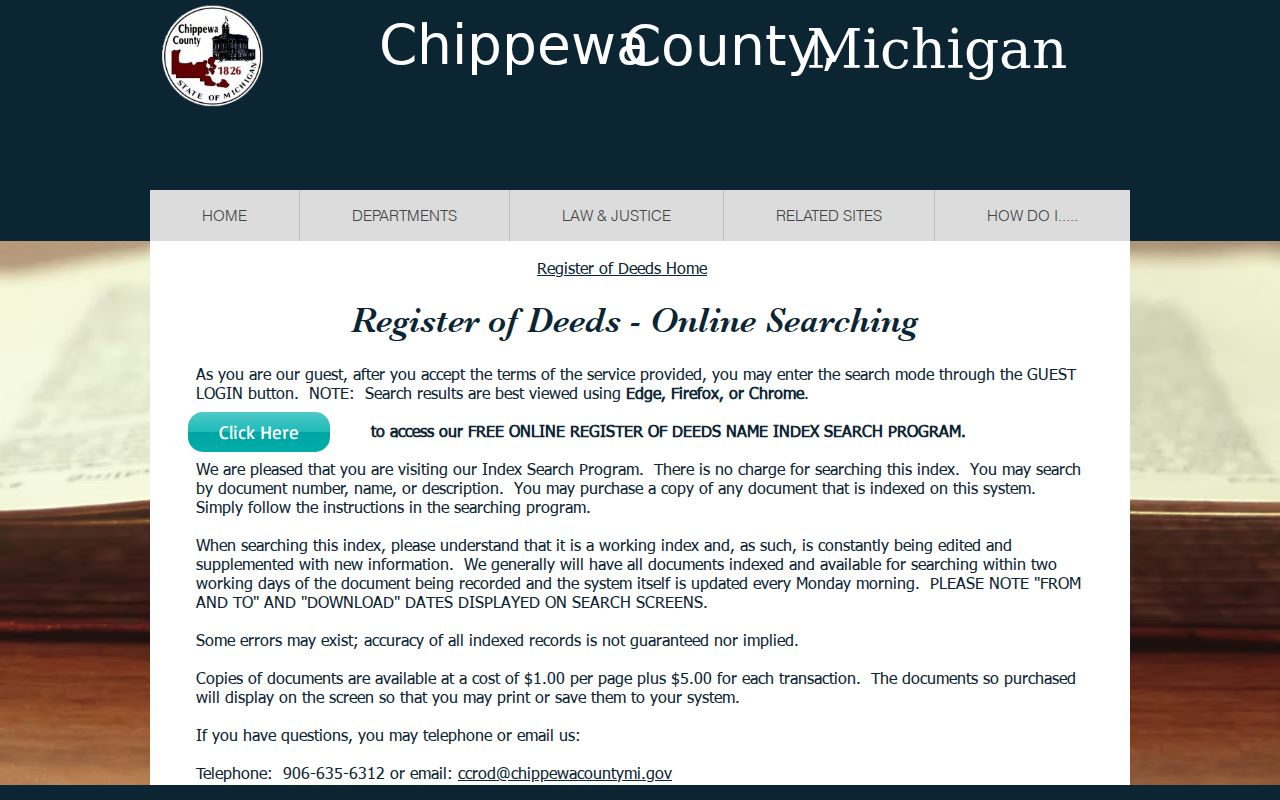
That page supports the timing warning and workflow. It cannot confirm that any specific deed sits in the live index today.
Note: Save your search date and range, because a later LandWeb update may return a different result from the same query.
Order Chippewa County Deed Copies
An index entry is only the beginning. The instrument itself must be inspected. Chippewa County prices an online copy at $1 per page plus a $5 transaction fee. The image appears on screen for printing or saving. The office directory also lists a $5 certification fee. It adds a minimum search fee and a $30 recording fee. Buying a copy is a different transaction from recording a new document. The directory page displays the office and vault details.
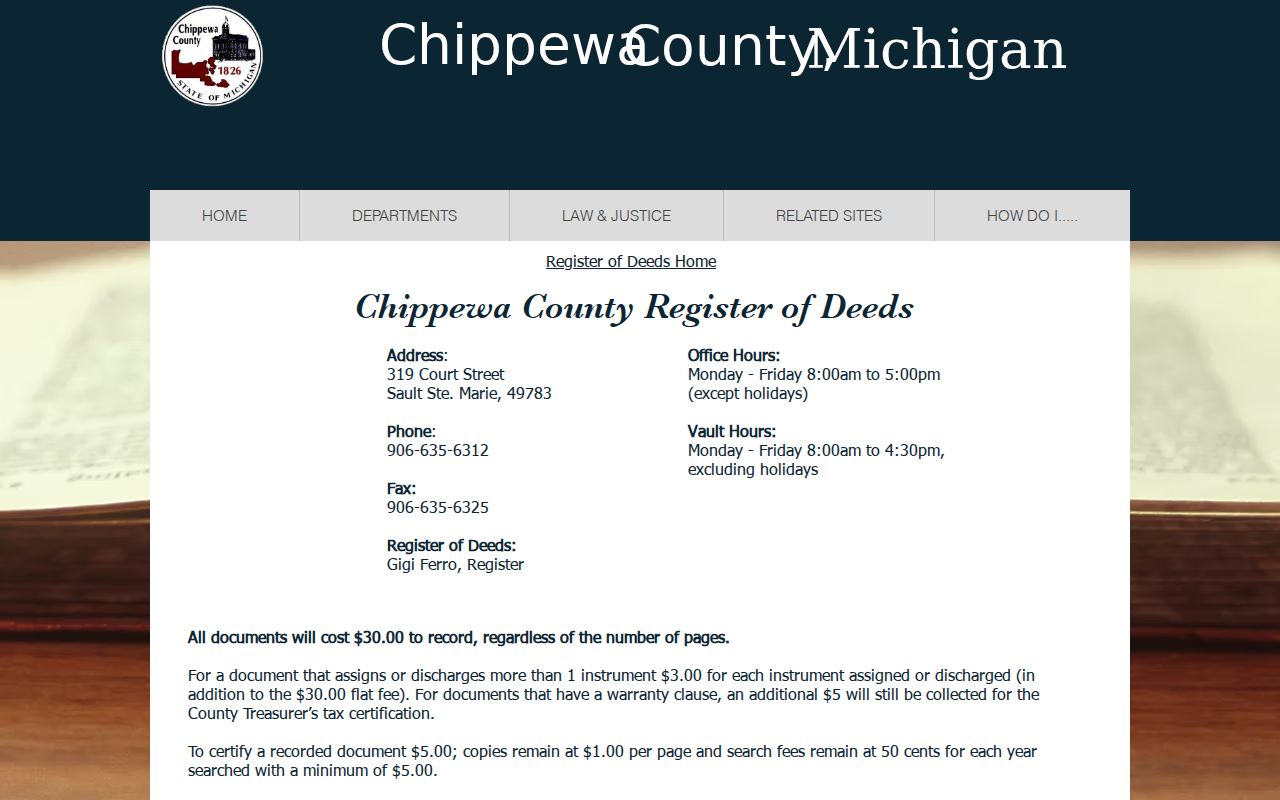
Confirm the current charge and the required reference before sending payment. That step matters most for a certified copy or a staff search spanning many years.
Reach Chippewa County Deed Records
LandWeb is not the only door. The Register of Deeds counter sits at 319 Court Street in Sault Ste. Marie, open Monday through Friday from 8:00 a.m. to 5:00 p.m. The records vault closes at 4:30 p.m. Staff answer at 906-635-6312 and ccrod@chippewacountymi.gov.
For a manual search, hand over party names, a narrow year span, the municipality, and the legal description. A broad year-by-year name search may draw a charge under the published fee schedule. Any mail or office request should say whether a plain or certified copy is wanted. It should also include the recording reference when known.
The county counts more than 150 years of recorded material. Not all of it is imaged online. When the online index ends or an old reference points into the deed books, the counter and vault are the proper fallback.
Extend Chippewa County Deed Research
The earliest LandWeb year remains an open question. State aids extend context without filling the chain. The Library of Michigan Chippewa guide points to newspapers, plat books, atlases, census, cemetery, and church material that can explain an old road, subdivision, or name variant in Chippewa County.
The Archives of Michigan guide also identifies Chippewa tax assessment rolls from 1849 through 1920. It adds court and naturalization record groups. A name on an old tax roll may mark a taxpayer or occupant. It may not be the owner of record. Treat it as a lead back to a deed, probate order, patent, or other controlling instrument. Deed research can keep going long after the portal trail stops.
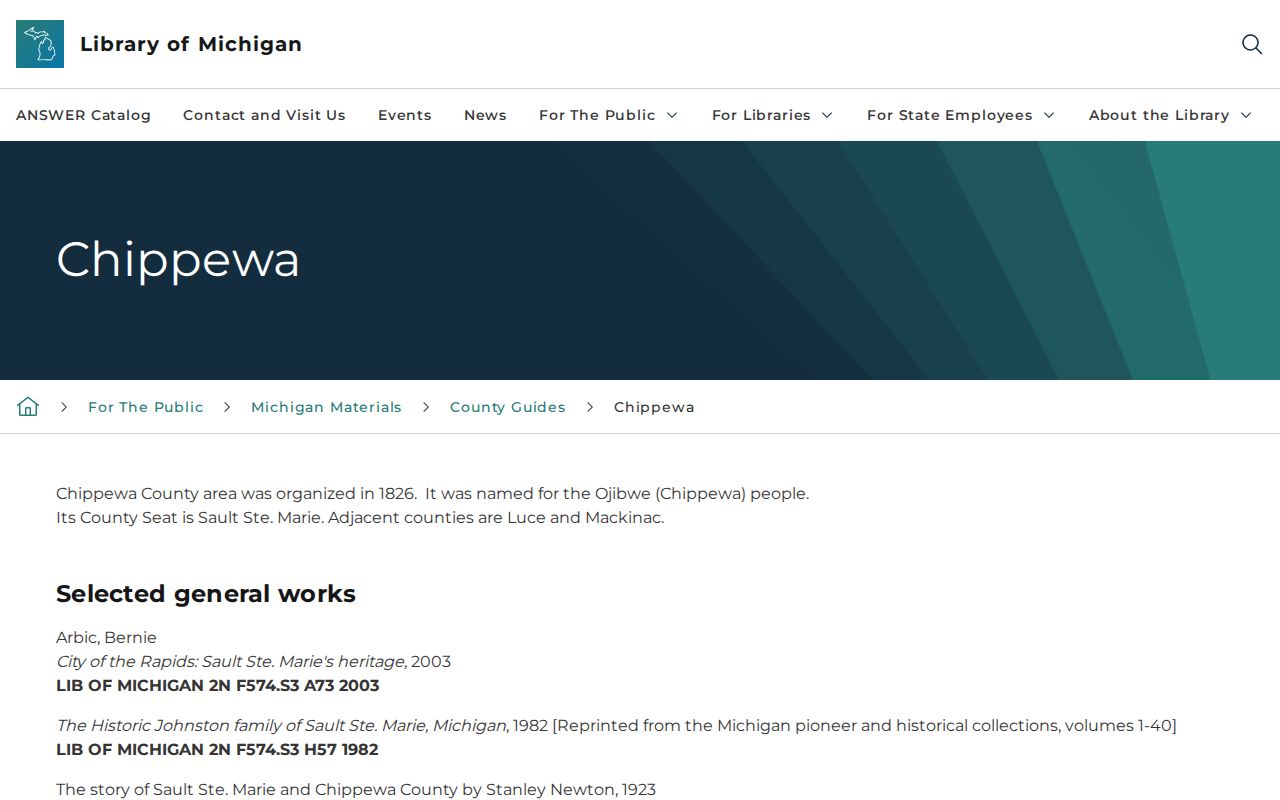
Historical context can explain a description or a name change. It should never be presented as current title evidence.
Watch New Chippewa County Filings
Chippewa County residents can enroll in a free fraud-alert service from the Register of Deeds. It watches recorded names. When a document matches a chosen name, the subscriber gets a notice. That notice is a prompt to look at the filing. It is not proof of fraud and not a replacement for a title review. Treat it as a starting point.
Common names create noise. Initials, alternate spellings, and entity names can also produce missed or extra alerts. Enroll the variants that plausibly appear in existing deeds. Confirm current instructions on the official fraud-alert page. If a notice looks unfamiliar, contact the office before drawing conclusions.
Know Chippewa County Deed Limits
A recorded Chippewa County deed proves one thing. The office accepted and indexed the instrument presented to it. It does not promise the grantor held every claimed interest, that no unrecorded right exists, or that a colored parcel line on a plat matches the legal boundary. The county's race-notice rule, "first in time is first in right," is a concise orientation, not legal advice for a disputed chain of title.
Recorded is not guaranteed. Chippewa County deed records are working public records, not a title opinion. Use a qualified attorney or title professional for an ownership dispute.
Read the image itself. Check easements, reservations, restrictions, notary and signature blocks, referenced exhibits, and recording stamps. If a survey question sits at the center of a Chippewa County parcel dispute, rely on the legal description and a licensed surveyor rather than the tax map.
Document a Chippewa County Deed Search
A good deed-record note can be repeated by someone else. For each step, record the agency, the portal URL, the party role, the exact query spelling, and the date range. Also record the instrument type and the recording date. Add the book and page or instrument number, the legal description, and the access date. Include the image state, the fee shown, and the point the result supports. If the search stops at the earliest available online item, say so plainly. Never invent the beginning of ownership. For a current Chippewa County parcel, the general Chippewa County property-search workflow can recover the PIN and an owner lead. Do this before deed work begins.
This discipline keeps a long chain auditable when a parcel split, estate transfer, land contract, or old description creates a branch another researcher must retrace. Mark each branch separately. Note "instrument located" apart from "interest explained." A mortgage discharge may settle that mortgage. It may say nothing about an easement. A survey may redescribe land without conveying it. That distinction keeps a crowded index date from being mistaken for one simple transfer of a Chippewa County property.