
Build a Chippewa County Former-Owner Timeline
Treat every earlier transfer as its own sourced row. The Register of Deeds is the anchor for this work. Its Chippewa County Register of Deeds holdings span more than 150 years. The collection covers deeds, land contracts, probate orders, plats, certified surveys, land patents, mortgages, and liens. Not all of it sits online. LandWeb's public instructions leave the earliest indexed year unstated. Some older coverage still needs confirmation from the office. Plan recent lookups around the portal and older ones around the vault.
| Source | Years It Covers | Where Held | What It Shows |
|---|---|---|---|
| LandWeb working index | Earliest year not stated | Online, guest access described | Names, instruments and descriptions used to reconstruct transfers |
| Recorded deed books | More than 150 years of ROD holdings | Register of Deeds vault | Earlier parties, legal descriptions, book/page and referenced instruments |
| Archives tax assessment rolls | 1849-1920 | Archives of Michigan | Historical taxpayer trail that must be checked against deeds |
| Plat, patent and atlas sources | Varies by collection | ROD, Archives and Library of Michigan | Subdivision, lot/block and government-survey context |
LandWeb answers most recent-transfer questions. When a chain runs past its earliest result, carry the legal description to the vault and to historical repositories. A tax-roll name shows who was assessed. It does not prove that person held title.
Find Chippewa County Previous Owners in LandWeb
The county's online-search instructions cover lookups by document number, name, or description. They point guests to LandWeb itself. New documents are generally indexed within two working days, and the system receives a Monday update. That cadence explains a recent gap. Even so, a brand-new deed may not appear yet.
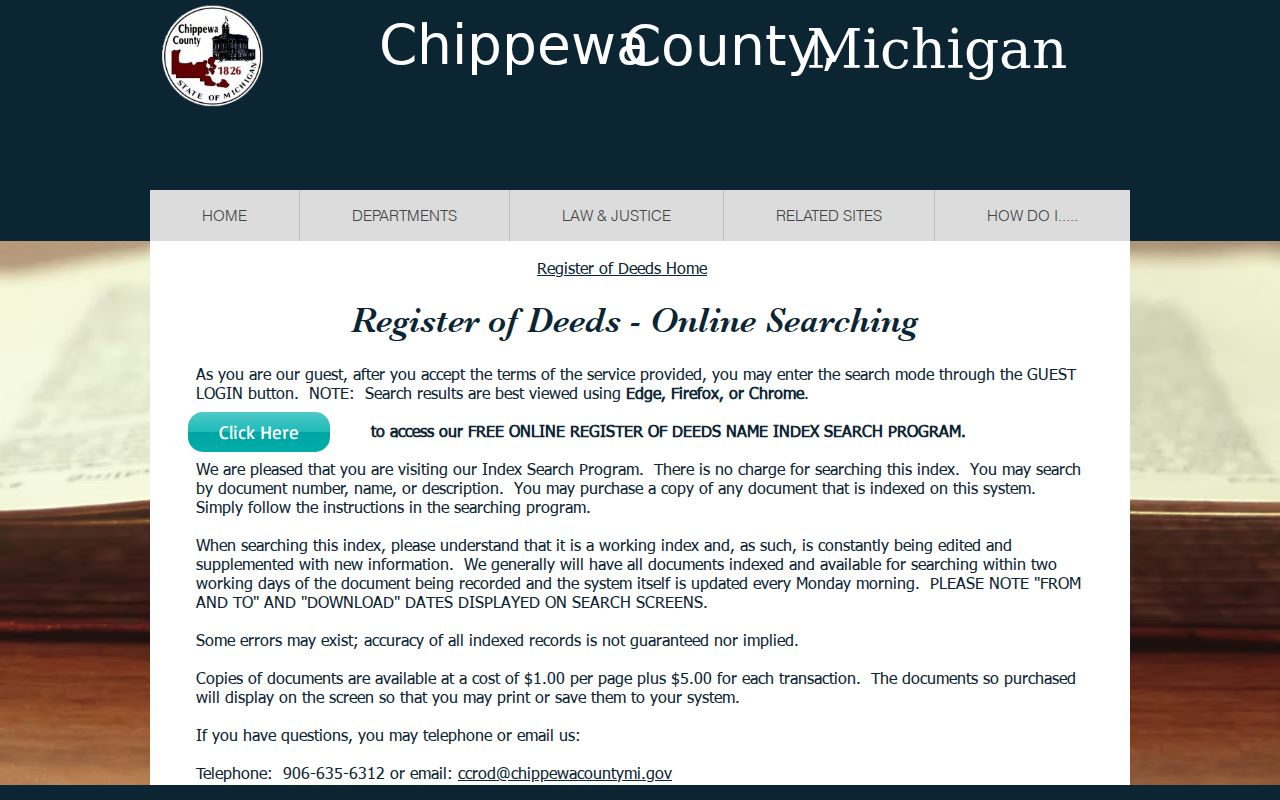
Search both sides of every transfer. Run grantor and grantee names, plus spelling variants, middle initials, former names, and entity suffixes. Record the date window and any values shown. The index is edited constantly. Typographical errors slip in, so open the document image or obtain a copy before an index line becomes an ownership statement. The LandWeb search screen itself is the place to confirm which controls appear.
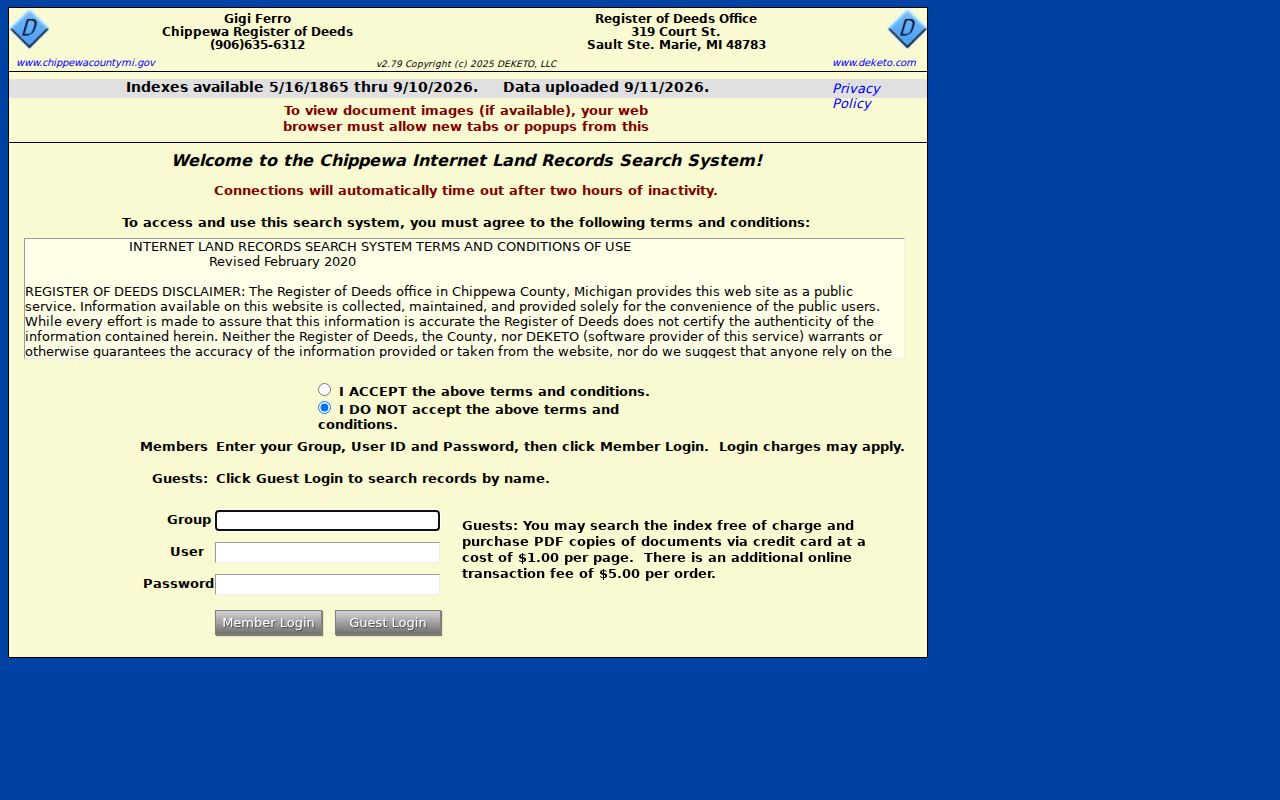
The blank LandWeb screen shows where guest access begins.
Note: The public instructions do not publish LandWeb's earliest online year; state that limit as unknown until the portal or office confirms it.
Reconstruct Chippewa County Prior Owners in Reverse
Each deed points to the one before it. Start with the current parcel number and the latest deed. Copy the legal description exactly, because an old conveyance may not carry the modern street address.
- Search the current name as grantee or transferee and locate the newest relevant instrument.
- Read the grantor, recording data, deed type, legal description, reservations, and prior references from the image.
- Search that grantor as an earlier grantee, compare the land description, and repeat the step.
- Stop the online claim at the earliest result actually found, then continue through the ROD vault and named historical sources.
- Grantor / grantee
- The conveying party and receiving party named in an instrument.
- Chain of title
- The ordered sequence of instruments affecting the same interest in land.
- Reverse index
- An index route that follows names backward by changing each prior grantor into the next grantee search.
- Warranty / quitclaim
- Different deed forms; a quitclaim conveys whatever interest the grantor had without a warranty of title.
Flag Branches Among Chippewa County Past Owners
Past owners rarely form a neat ladder. A personal representative deed may open a probate file. A trust may need trustee and grantor searches. A land contract can trail an assignment, memorandum, discharge, or later deed, while tax and sheriff deeds point toward court, notice, redemption, and foreclosure records.
Parcel splits, combinations, new surveys, and easements add branches. Mark each branch instead of forcing it into one transfer row. An instrument can sit on file while the interest it touches stays unexplained. That distinction matters. It keeps a house history from claiming a complete Chippewa County chain when a probate order, parent parcel, or land contract still needs review.
Extend Chippewa County Former-Owner Research Offline
When LandWeb stops answering, the office can. Call 906-635-6312 or write ccrod@chippewacountymi.gov. The public counter keeps Monday through Friday hours, 8:00 a.m. to 5:00 p.m., with the vault closing at 4:30. Give the staff names, years, and the parcel description. Add the last known book, page, or instrument reference. The directory publishes a minimum search fee and year-by-year name-search charges, so a narrow request pays off.
The Archives of Michigan asks researchers to prepare township, range, and section information for land work, and its Chippewa guide maps historic land, tax, court, and naturalization groups. Tax assessment rolls there run from 1849 through 1920. Those records supply context, not title. The controlling transfer still comes from a deed, patent, probate instrument, or other operative record.
Recover Parcel Names for Chippewa County Former Owners
A street address can vanish from old records. The land stays put. For platted property, search the subdivision name and the lot-and-block terms. Rural parcels need section, township, and range. Road variants, parent parcels, river calls, monuments, and old post-office labels may be the only bridge between a modern PIN and a nineteenth-century entry.
The Library of Michigan's Chippewa County guide points to newspapers, plat books, atlases, census abstracts, cemetery records, and church materials. Old subdivision names often surface there. They corroborate identity. Record the citation, publication date, and page beside each clue, then verify the connection in the ROD record.
Note: A newspaper notice or old atlas supplies a lead; it does not establish that a named person held title.
Check Chippewa County Previous Owners in Tax Rolls
Chippewa County tax rolls offer a long memory. The Archives holds an assessment series covering 1849 through 1920, and it can tie a name to the same land across decades. That reach matters when the online deed index falls short, or when a deed book reference never appears. One caution applies. A name on the roll may belong to a taxpayer or an occupant, not the fee owner. Record the field exactly as the roll labels it.
A clean timeline solves most puzzles. Pair each tax-roll year with the deed-book result, the legal description, and any estate or court event. When names conflict, report both and dig into the dates. Resist picking the one that looks right. Historical accuracy means preserving the conflict until an instrument or office record settles it.
Review the Instrument Behind Each Chippewa County Name
The index only points the way. The instrument image holds the real facts. There you check the recording stamp, parties, signatures, notary, legal description, reservations, easements, and exhibits. Chippewa County charges $1 per page for online copies, plus a $5 transaction fee, and the image appears on screen to save or print. A separate $5 certification fee appears in the directory. Verify current charges before you buy anything.
The Register of Deeds directory lists the office hours, record categories, and fee schedule for that follow-up.
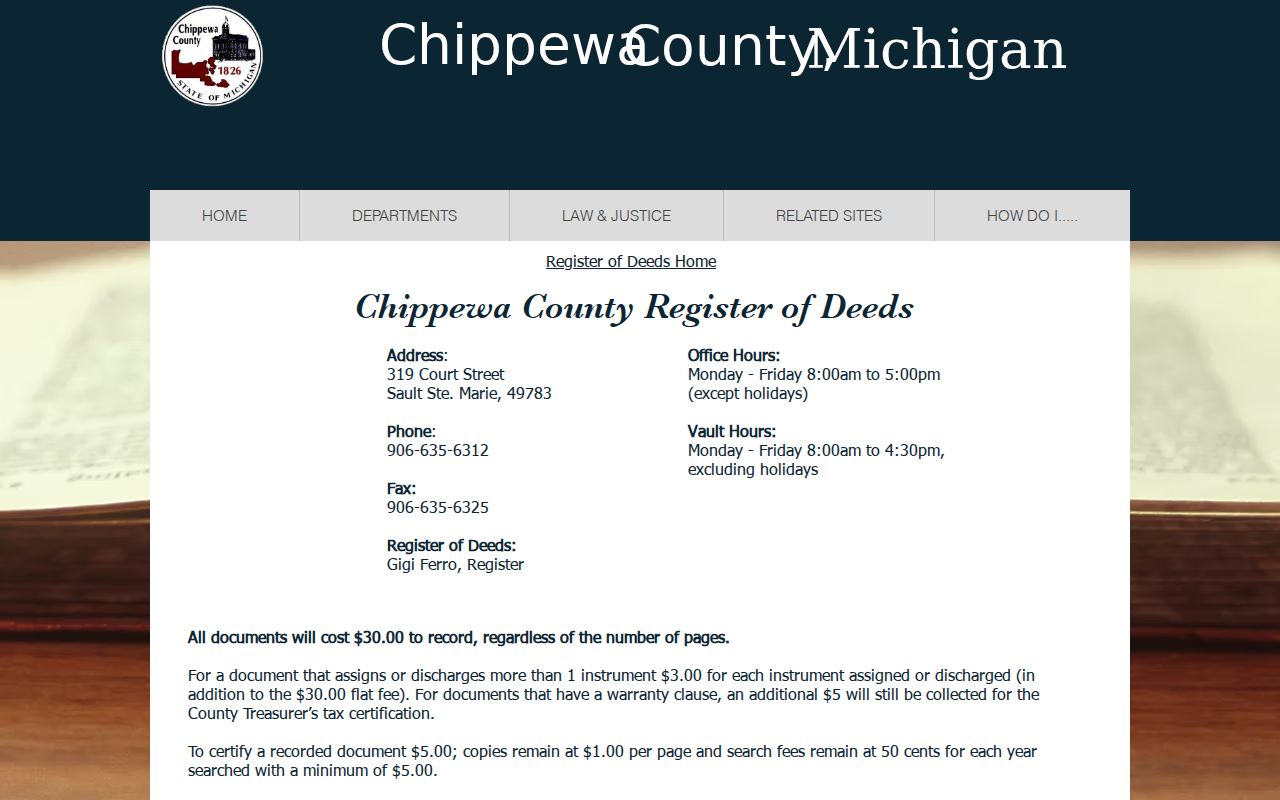
A certification proves the copy is an office record. It does not convert a homemade list of past owners into a title opinion. When a legal transaction or disputed interest turns on the answer, get the certified instruments and qualified title advice. Screenshots will not carry that weight.
Separate Chippewa County's Transfer Clocks
A single transfer can run on three clocks in Chippewa County. The deed carries an execution date. The ROD adds a recording or index date. The assessor or tax-transfer date may trail behind. They rarely line up. LandWeb can still sit inside the county's general two-working-day indexing window, while the assessor record keeps showing an earlier taxpayer for the active tax year.
Lay every date on one timeline and name its source. The deed image controls execution and recording facts. The ROD index shows when a filing became discoverable there. BS&A shows the tax-year owner or taxpayer label. That safeguard earns its keep when someone asks about previous owners right after a closing.
State the Endpoint of Chippewa County Ownership History
Never claim ownership began with the earliest online hit. The honest statement is narrower. Say the chain was traced to the earliest indexed result located, give its year, and name the next source to try. A patent, original plat, deed book, tax roll, or court record may extend the story. Gaps stay gaps. If a repository has not confirmed a requested range, leave that gap explicit.
This discipline beats false completeness. It hands the next researcher the exact name, legal description, date range, and repository to use. Former-owner work can serve a purchase review, an estate matter, subdivision history, or a study of how a rural tract in Chippewa County changed hands. Just stay within what each record truly proves.
Online cutoff. LandWeb's earliest year is not stated in the public instructions. Older owners may require the ROD vault, deed books, Archives, Library, plats, and patents.